Modern poultry production depends on proper feed distribution which acts as a vital element. The most expensive operational cost for farms stems from feed expenses which cause financial damage through even minor productivity losses. Effective poultry feed management helps birds obtain necessary feed amounts with feed quality that meets their requirements at appropriate times. Well-organized distribution systems enable farms to achieve better growth rates while maintaining flock uniformity and increasing their financial success.
Successful production depends on poultry operations that implement comprehensive feeding management of poultry systems. Birds need continuous access to complete nutritional meals in order to remain healthy and productive. Birds experience competition when feed distribution becomes uneven which leads to stress and brings about unpredictable weight changes. The financial necessity to manage poultry feed properly develops into a major welfare issue.
The Role of Feed Distribution in Poultry Production
Poultry feed management functions efficiently when people learn about the nutritional needs of birds throughout their entire growth cycle. Broilers, layers and breeders have distinct dietary requirements which they need to meet for proper development. When feed distribution becomes uneven some birds will eat too much while other birds will not receive enough food. The flock performance problem results from this distribution issue between the birds.
Feeding management of poultry establishes standardized procedures that maintain operational efficiency. Birds experience steady growth when they have equal access to feed because it helps them reach their target weight. This leads to stronger poultry flock uniformity improvement, which is essential for predictable production outcomes. Organized feed delivery systems enable farms to achieve both higher poultry farm operational efficiency and better financial performance.
The process of feed management in poultry operations needs to establish links between three elements which include nutritional planning, equipment capabilities and monitoring systems. The optimal results from high-quality feed require a structured process for its implementation.
Impact on Growth and Productivity
Poultry growth performance improvement depends on proper distribution of balanced feed. The nutritional value of feed results in more effective body weight gain which occurs when birds receive equal feeding opportunities. This results in better broiler feed efficiency because birds gain more weight per unit of feed consumed.
Effective poultry feed management practices for poultry operations significantly influence the production of eggs. The continuous provision of feed on layer farms creates a stable environment which supports their egg-laying activities. The distribution of layer feed through effective layer feed distribution methods helps decrease stress levels among birds while keeping their nutrients in balance. When birds experience interruptions or uneven access, egg output and shell quality may decline.
The implementation of a system for structured poultry feeding schedule management enables birds to follow their eating schedule at designated times. The flock maintains consistent eating patterns which help them digest food without any interruptions. The process leads to improved poultry production efficiency strategies which create benefits that last for extended periods.
Reducing Feed Waste and Contamination
Feed waste directly increases operational costs. The implementation of feed wastage reduction in poultry strategies for poultry operations results in significant expense reductions. Poor distribution systems often result in spilled feed, uneven trough levels, and overfilling. The existence of these problems results in resource waste which attracts pests and heightens contamination dangers.
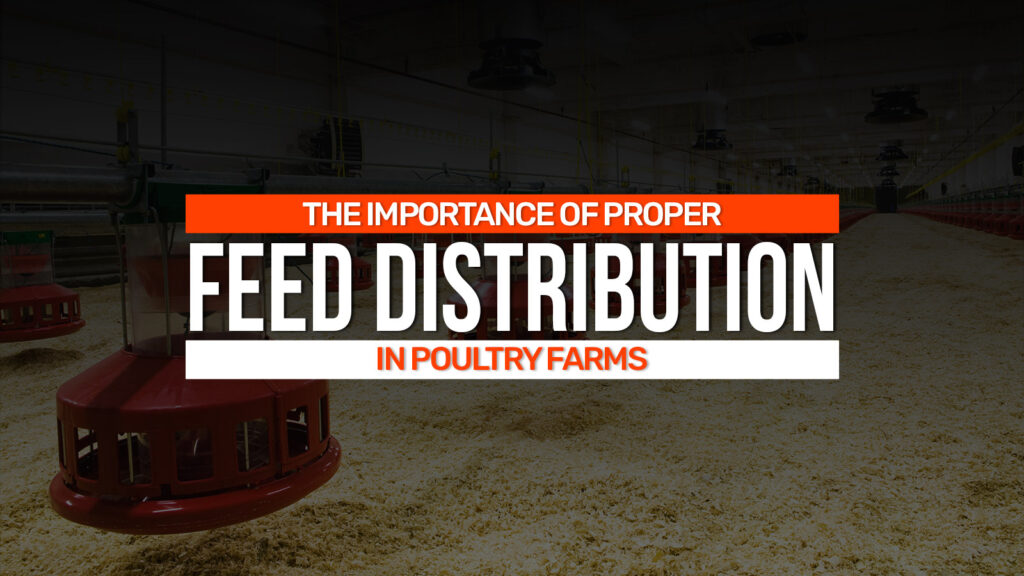
Modern poultry feeding systems are designed to control portion sizes and distribute feed evenly. Automatic poultry feeders have become the standard feeding method on many farms because they provide precise feeding information which reduces human mistake. The systems maintain consistent feed levels while they prevent unnecessary feed waste.
Another essential element of poultry feed management involves poultry feed contamination prevention. Feed storage that follows proper methods and operates with intact equipment will protect feed from moisture infiltration and bacterial contamination and mold growth. Contaminated feed affects bird health and reduces productivity. Strong poultry feed quality management practices ensure that feed remains safe and nutritionally balanced.
Technology and Equipment in Feed Distribution
Poultry farm automation equipment has reached new levels of development which now improves the process of distributing feed. Automated systems track feed levels while they manage flow rates and enable operators to monitor feed distribution in real time. The innovations help poultry farm productivity optimization because they decrease work requirements while they maintain operational consistency.
The maintenance of poultry feeding equipment maintenance procedures requires regular attention which holds equal value to all other activities. Worn augers, blocked lines, or malfunctioning feeders disrupt feed supply. Regular inspection prevents breakdowns and supports stable operations. The success of feeding management of poultry operations relies on equipment that maintains consistent performance throughout every operational period.
The system enables automatic poultry feed cost control. Farmers can discover distribution problems through tracking feed usage patterns which lets them change their distribution techniques. The use of data-based decision making results in better operational efficiency for poultry farms and improved management of their resources.
Feed Conversion and Economic Efficiency
Feed conversion serves as a primary performance metric for poultry production. The system of structured poultry feed management enables farms to achieve measurable improvements in poultry feed conversion ratio improvement. Birds achieve better feed transformation into body weight or egg production when they receive identical nutritional content throughout their lives.
The profitability of broiler operations increases because of better broiler feed efficiency. Target weights can be reached with less feed when feed conversion ratios decrease. The production process results in significant cost reductions through all production cycles.
The proper feeding management of the poultry system protects against the probability of excessive feeding. Animals that receive extra feed will develop extra fat which decreases their carcass quality while increasing production expenses. Equal distribution between elements leads to better health outcomes and financial success.
Avoiding Common Feeding Mistakes
There are several poultry feeding mistakes to avoid. The three main problems which affect feeding procedures involve people who do not feed their animals at regular times, they feed their animals at incorrect trough distances, and they do not set up their equipment correctly. Poor monitoring practices lead to nutritional issues for poultry which result in permanent performance deficits.
Another frequent mistake involves neglecting feed storage conditions. The improper storage system causes poultry feed quality management to fail while it creates higher chances of contamination. Farmers must maintain clean silos and monitor moisture levels carefully.
The development of efficient poultry production efficiency strategies needs ongoing system examination as a fundamental component. The assessment of feed distribution systems reveals operational weaknesses which organizations require to uphold their established performance standards.
Frequently Asked Questions
1. Why is proper feed distribution important in poultry farms?
The distribution of feed must be done correctly because it will result in birds receiving equal nutrient intake while their health will be maintained and their poultry feed management system will become more effective in achieving better production results.
2. How does feed distribution affect poultry growth performance?
Poultry exhibits enhanced growth through better weight retention when all birds have equal access to feed which supports poultry growth performance improvement.
3. What are the best feeding systems for poultry farms?
The current poultry industry uses automatic poultry feeders together with modern poultry feeding systems to deliver feed in precise and consistent amounts.
4. How can farmers reduce feed wastage in poultry farming?
Poultry operations experience reduced feed waste through the implementation of structured systems which specifically target feed wastage reduction in poultry.
5. What is the impact of poor feed distribution on poultry health?
The delivery of feed needs to be distributed evenly because its uneven distribution will make poultry experience stress which leads to their immune system becoming weaker and their overall performance decreasing through weak poultry nutrition management.
6. How often should poultry be fed for optimal production?
The implementation of a poultry feeding schedule management plan leads to controlled intake which results in better growth performance.
7. What are common feed management mistakes in poultry farming?
Farmers must avoid common poultry feeding mistakes to avoid such as poor equipment maintenance, irregular feeding schedules, and ignoring feed quality.
8. How do automatic feeders improve poultry farm efficiency?
The use of automatic poultry feeders enables precise feeding operations while decreasing need for manual work which leads to improvements in poultry farm productivity optimization.
9. What role does nutrition play in poultry productivity?
Balanced poultry nutrition management establishes a framework which enhances immunity of birds while supporting their growth and production performance.
10. How can proper feeding improve feed conversion ratio in broilers?
Structured poultry feed management supports poultry feed conversion ratio improvement and stronger broiler feed efficiency.
Final Thoughts
Poultry production generates profits through proper distribution of feed to birds. Strong poultry feed management practices improve growth, reduce waste, and enhance flock uniformity. The combination of organized systems with modern equipment and continuous monitoring enables farms to achieve greater productivity and improved financial results. The effective management of poultry feeding practices results in sustainability gains, bird welfare improvements, and sustainable operational success.