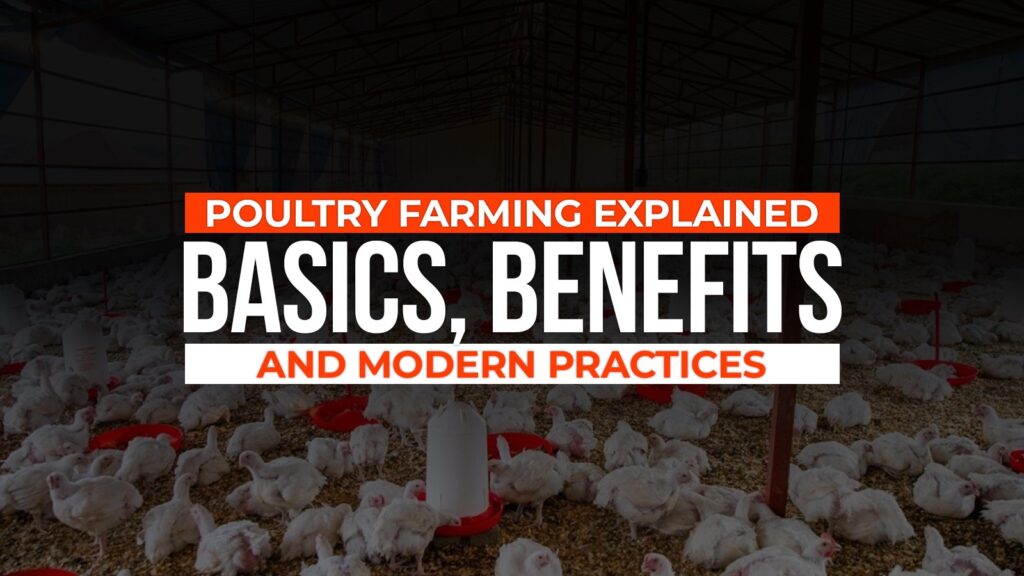
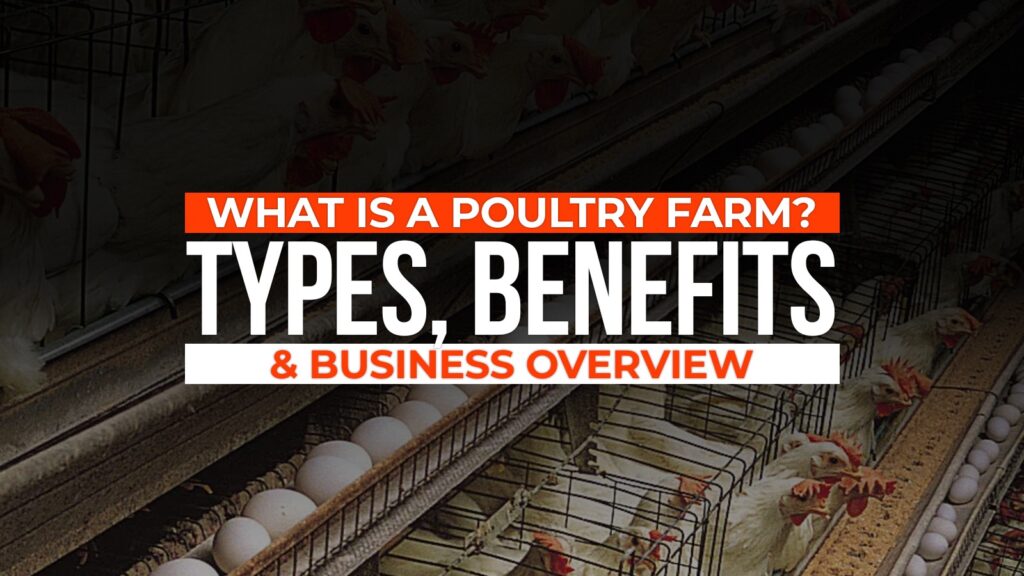
Basically, a poultry farm is a farming establishment whereby birds, such as chickens, are raised for meat, eggs, or both. Poultry farming has become an integral part of food security and local production in Saudi Arabia. With increasing demand for affordable protein and heavy governmental support, the sector is spreading across the Kingdom-from large industrial facilities to family-run small poultry farm setups.
The poultry farm basically encompasses good bird care, proper nutrition, and controlled environments with solid poultry farm management. The very important point is to find out the different types of farms and their business potential, whether one is going to start a new poultry farm operation or run an existing one, for long-term success.
Types of Poultry Farms
There are many types of poultry farms, each meant for a specific production purpose. Of these, broiler poultry farming is the most prevalent in Saudi Arabia, focusing on the upbringing of chickens for meat purposes. Broiler farming is very popular, for its production cycle is rather short, along with a consistent market demand. Birds are raised for a short time before being prepared; thus, it is a high-turnover poultry farm business.
Another very common model is the egg poultry farm where layer chickens are raised mainly for their eggs. Planning takes more time on these farms because layers stay in them longer. Lighting programmes, nutrition, and stress management are particularly important for the consistent production of eggs. Egg production farming has higher value especially when the local markets and distribution networks are stable.
Small scale poultry farming is normally done at family or community levels most of the time. These might be smaller in number but contribute significantly to the local supplies. Normally, a small poultry farm is ideal for beginners who might want to study the behavior of birds, feeding routines, and basic poultry farm management before expanding.
The main characteristics of urban supply chains are large-scale and commercial poultry farming, relying on automation, climate control, and data-driven systems with the ultimate goal of maximum output and efficiency. The produce usually reaches retailers, restaurants, and food processors across Saudi Arabia.
How Does a Poultry Farm Work?
Running a poultry farm is a successful venture owing to daily attention being paid to the health of the birds, their housing conditions, and feed quality. In fact, in climates such as Saudi Arabia, special attention has to be paid to temperature control and ventilation. Generally speaking, farms use enclosed housing that protects the birds from extreme heat but still allows for airflow and hygiene.
The core of production lies in feeding and watering. Well-balanced nutrition relies on growth rates, egg-laying efficiency, and general health conditions of the flock. Proper poultry farm management ensures that birds receive consistent care that minimizes disease risk and loss.
Sanitation and biosecurity count, too. Restricted access, regular cleaning, and veterinary oversight can help prevent disease outbreaks that hit productivity and poultry farm profitability.
Merits of Poultry Farming in Saudi Arabia
Some major incentives are strong and consistent market demand. Chicken meat and eggs are indispensable items in households throughout Saudi Arabia, and for these reasons, poultry products play an indispensable role in the daily consumption of communities. The constant demand supports small poultry farm owners and large producers alike.
The returns on poultry farming are also faster compared to most other agricultural investments. Cycles of broilers are short, and egg production assures returns on a continuous basis; this makes profitability quite attractive to new investors. With proper planning, even a new poultry farm can be viable in reasonable time.
Another advantage is scalability: most successful commercial poultry farming operations in Saudi Arabia started small and grew over time. This allows the entrepreneur the flexibility to expand at his own pace, in tune with resources and experience that are acquired over time.
Employment opportunities are provided, and allied industries involved in feed supply, veterinary services, equipment manufacturing, and even transport are supported.
Raising Poultry as an Economic Endeavour
With the support of the government, there is great potential for growth, and this continues to attract investment in the poultry industry in Saudi Arabia. Subsidies, funding, and the development of infrastructure have eliminated obstacles to entry and expansion for any new poultry farm.
Selection of farm type is always a business choice. Investors typically prefer broiler poultry farming operations for faster turnover while building more permanence with egg poultry farm models. Many diversified farms blend both approaches for more balance in their income streams.
Costs are very important to understand. The main items of expenditure include feeds, housing, labor, and utilities. Good poultry farm management results in maintaining these costs at low levels while increasing efficiency and output.
Challenges and Risk Management
Like any other farming or agricultural undertaking, this too comes with a lot of challenges. If the management is not good, heat stress, feed price fluctuations, and disease might prevail. In Saudi Arabia, temperature control and water management are a particular concern regarding the health of birds in a poultry farm.
Still, these risks have been substantially mitigated by the current systems and training. Farms that make investments in proper housing, monitoring systems, and skilled labor are those that will be best positioned to manage operational challenges and maintain poultry farm profitability.
The Future of Poultry Farming in KSA
The prospect for poultry farming in Saudi Arabia is bright; population growth, shifting dietary preferences, and a focus on local production keep expansion on track. Innovations in commercial poultry farming automation and sustainable practices are shaping the next growth phase. There are also prospects for organic eggs and other value-added poultry products within niche markets. Any new poultry farm or established farmer may take advantage of this growth industry with proper planning and sound management.
Conclusion
A poultry farm is more than raising birds; it is a systematic agricultural business entity that contributes to food security, employment opportunities, and economic development. If it is a small poultry farm, a fully automated commercial unit, or an egg poultry farm, each model has its place in Saudi Arabia’s agriculture. Whichever the case, it is essential to understand the farm type, poultry farm management practice, or market demand for a new poultry farm. Indeed, with the right plan, poultry farming can be a stable and profitable long-term opportunity in the Kingdom.